
Apologies for the paucity of posts in recent weeks. I’ve become rather overstretched and the blog has been a casualty as a result. Anyway, here are some links that have caught my eye in recent weeks:
- Tamino in his Open Mind blog looks at the much-loved-by-skeptics 15-year hiatus period from 1998 to 2012 in temperature rise. Contrast and compare the 98-12 period with that of 92-06 and be enlightened.
- Paul Krugman has a very perceptive piece in the op-ed section of The New York Times called “Addicted to the Apocalypse”. In it, he takes issue with all those financiers, economists and commentators who have been arguing that “the sky is falling down” (for a taste of this meme read the blog Zero Hedge). Given my own blog, whilst not apocalyptic over the short term, is certainly pessimistic, Krugman’s criticisms apply equally to me. My view has changed a little recently, and I accept that the post credit-crisis period has seen a complete victory for monetarism: we have not all died of debt and Krugman is right to point this out. Restated, central banks have put into practice never-tried-before text book theory – and this ‘theory into practice’ has worked. Whether such a policy can work over the longer term, given that the underlying lack of economic growth hasn’t improved at all, is a completely different question. So I remain a worried parent with regard to my children’s future.
- Staying with Krugman, I am always astonished, and a little jealous, of how he can be so prolific but at the same time maintain such quality. Here he is in The New York Review of Books reviewing William Nordhaus’ book “The Climate Crisis: Risk, Uncertainty and Economics for a Warming World”. Nordhaus is probably the world’s leading economist writing on climate change today, and Krugman has a lot to say about Nordhaus’ approach to the problem.
- Of the UK political weeklies, I dip into both the left-learning New Statesman and the right-leaning Spectator on occasion. Here is a nice piece by Felix Martin of The New Statesman looking at the natural scientist’s approach and social scientist’s approach to global population limits.
- The US Energy Information Agency has an interesting analysis of why rig count is no longer a good forecaster of natural gas and oil production. I take on board the technical point that new rigs have different capabilities than those of the past, but still flag that US natural gas production has plateaued and, without new investment, looks on the verge of falling back. Note the comments of the outgoing CEO of Shell on how he regrets his big bet on shale (see here in The FT) and a separate FT article entitled “US Shale Is a Surprisingly Unprofitable Miracle”. This blog has been flagging the non-existent miracle in shale for a long time and also calling out academics like Dieter Helm who believe that the energy policy of most advanced countries could be built on a foundation of shale. Even the mainstream press appears to be realising the view of Helm and his fellow travellers is nonsense.


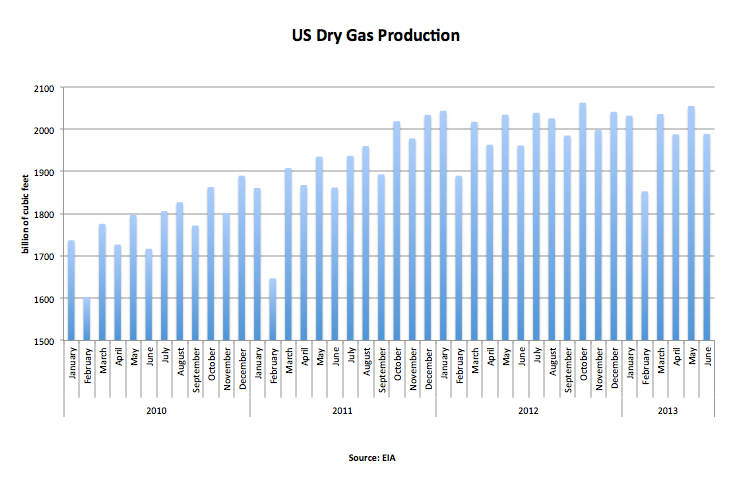
 The rapid deceleration in natural gas production growth has led to an uptick in prices over the last 12 months. Prices paid by electricity utilities have now reverted to between $4 and $5 dollars per thousand cubic feet from a low of less than $3 in April 2012. At some stage, rising prices should lead to a further investment in shale gas production, but this has yet to be seen.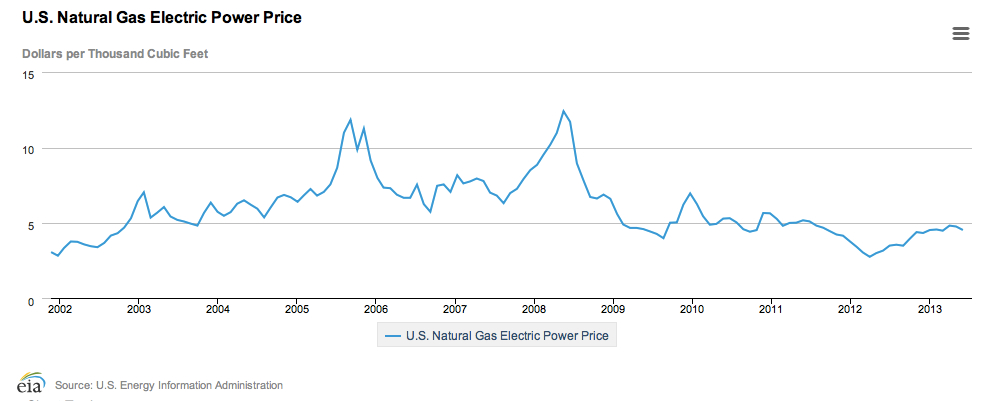

 Risk and Well-Being