Should Climate Change Override Every Environmental Concern?

One of America’s greatest living authors Jonathan Franzen has a provocative article in The New Yorker arguing that the environmental movement’s infatuation with climate change has been detrimental to local environmental initiatives. I am a huge fan of Franzen: “The Corrections” and “Freedom” are two of my favourites books. Yet I find his analysis muddled. In fact, I disagree with almost everything he says.

Franzen presents the ‘wicked problem’ of climate change as almost insurmountable.

Climate change shares many attributes of the economic system that’s accelerating it. Like capitalism, it is transnational, unpredictably disruptive, self-compounding, and inescapable. It defies individual resistance, creates big winners and big losers, and tends toward global monoculture—the extinction of difference at the species level, a monoculture of agenda at the institutional level. It also meshes nicely with the tech industry, by fostering the idea that only tech, whether through the efficiencies of Uber or some masterstroke of geoengineering, can solve the problem of greenhouse-gas emissions. As a narrative, climate change is almost as simple as “Markets are efficient.” The story can be told in fewer than a hundred and forty characters: We’re taking carbon that used to be sequestered and putting it in the atmosphere, and unless we stop we’re fucked.

Against this background, Franzen believes that the concerned citizen is being bounced into caring about only one true environmental ill.

The question is whether everyone who cares about the environment is obliged to make climate the overriding priority. Does it make any practical or moral sense, when the lives and the livelihoods of millions of people are at risk, to care about a few thousand warblers colliding with a stadium?

And this is a planetary ill they can do nothing about.

To answer the question, it’s important to acknowledge that drastic planetary overheating is a done deal. Even in the nations most threatened by flooding or drought, even in the countries most virtuously committed to alternative energy sources, no head of state has ever made a commitment to leaving any carbon in the ground. Without such a commitment, “alternative” merely means “additional”—postponement of human catastrophe, not prevention. The Earth as we now know it resembles a patient whose terminal cancer we can choose to treat either with disfiguring aggression or with palliation and sympathy. We can dam every river and blight every landscape with biofuel agriculture, solar farms, and wind turbines, to buy some extra years of moderated warming. Or we can settle for a shorter life of higher quality, protecting the areas where wild animals and plants are hanging on, at the cost of slightly hastening the human catastrophe.

Indeed, I think his answer over how much emphasis we should place on climate change is wrong on many levels. First, I don’t see a trade-off. Humanity doesn’t have a finite budget of morality. If I am a good father, does that mean I have no choice but to beat my wife? In reality, those individuals campaigning against climate change are also likely to be the ones doing grass roots environmental activity. Continue reading
What Does ‘a Good Life’ Mean?

The main British political parties are in the midst of publishing their policy manifestos ahead of the May 7 general election: The Labour, Green and Conservative party manifestos are already out, the Liberal Democrats and UKIP ones are yet to come.

I will focus on the Conservative Party manifesto in this blog post since it could quite easily form the policy platform of the next government. Moreover, in rolling out the manifesto, Prime Minister David Cameron chose to frame the policy prescription in terms of helping people to achieve “a good life”.

As a politics, philosophy and economics (PPE) graduate from Oxford, I am sure the PM is well aware that the term ‘the good life’ carries with it considerable philosophical baggage. Does he give a nod to Aristotle’s definition of “the good life” or has he reduced the concept to mere materialism? Let’s take a look by first pulling out each reference to “a good life”in the speech Cameron gave introducing the new manifesto:

The next five years are about turning the good news in our economy into a good life for you and your family.

Realising the potential of Britain…

…not as a debt-addicted, welfare-burdened, steadily-declining, once-great nation – which is what we found…

…but a country where a good life is there for everyone willing to work for it…

We can be the country that not only lives within its means and pays its way…

…but that offers a good life to those who work hard and do the right thing.

That’s what I mean by a good life – families secure, the peace of mind that comes with a proper job and a career, the security of knowing your children are getting a great education.

…to make this a country where those who work hard and do the right thing can enjoy a good life.

Part of having a good life is having a home of your own.

A good life should mean that raising your family feels like an incredible and joyful and – yes – sometimes exhausting journey…

It’s hard having a good life without a good job.

With five more years we can turn the good news in our economy into a good life for you and your family.

We offer a good life for those willing to try – because we are the party of working people.

So the good life includes 1) employment, 2) home ownership and 3) a great education for your children. It’s pretty pedestrian stuff and certainly a world away from Aristotle’s idea of the good life. Continue reading

Charts du Jour, 10 April 2015: The IMF Grows Cautious on Growth

The potential for secular stagnation has been a consistent theme of this blog; in other words, we should entertain the idea of slow (or even zero growth) as a possible norm–and plan our lives so that we fully recognise this risk. Meanwhile, the discussion of permanently slower growth has migrated from ‘crankdom’ to mainstream in five short years, and now even the IMF is humming the same tune.

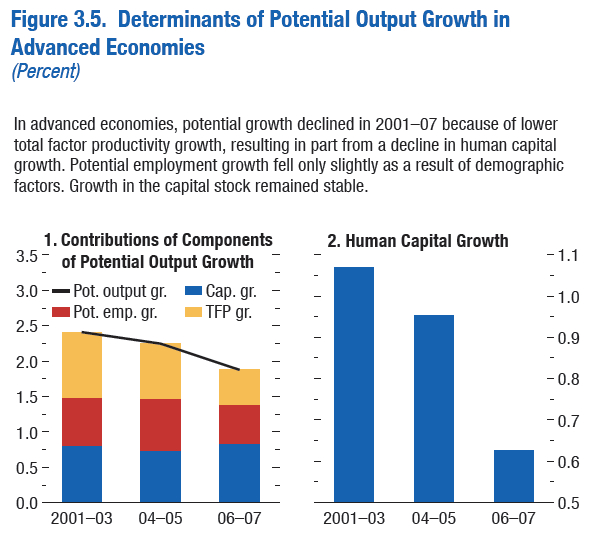
This week, the IMF pre-released a chapter from its flagship World Economic Outlook publication. The chapter is titled “Where Are We Headed? Perspectives on Potential Output“. It starts off by pointing out that in advanced economies growth was coming off even before the Great Recession hit in 2008 (on all charts, click for larger image):

Determinants of Potential Output Growth jpegAs the above chart shows, potential output growth can be divided into three components: 1) employment growth (more people or longer hours), 2) capital growth (more machines and computers) or 3) total factor productivity (better educated people plus innovation). The big decline was in the last category, which flies in the face of all the breathless cornucopian stories we here: tales of technology abolishing every human ill or want.

Furthermore, the IMF now increasingly recognises two stark realities. First, ageing societies will act as an increasing drag on growth in not only advanced but also emerging market economies and, second, total factor productivity gains are slowing in emerging economies as these countries get closer and closer to the innovation frontier of the advanced economies (moving from catch-up to caught-up). Continue reading

Chart du Jour, 8 April 2015: The Problem with Productivity

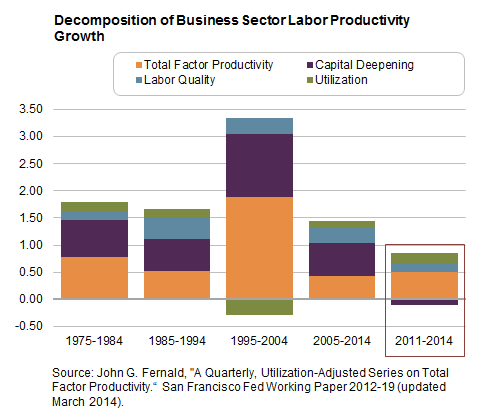
The UK is in the midst of a productivity panic. The country has exhibited a solid economic recovery measured in terms of GDP, but not one in terms of being able to do more with less. In short, the country is pumping out a larger amount of stuff and services because a) more people are working and b) those who are working are putting in longer hours.

Likewise, the US faces a similar productivity conundrum (if not quite so pronounced). Take this chart from the Federal Reserve Bank of Atlanta (here, click for larger image):

Labour Productivity jpeg.

The US appears to be productivity-challenged as well. And productivity is the thing that is supposed to make us rich (sort of). What is going on? Well, we could surmise that we are suffering from the early symptoms of diminishing returns to technology, an idea advanced by the growth economist Robert Gordon (see here).

Continue reading

Charts du Jour, 6 April 2015: US Natural Gas Production

The US government agency The Energy Information Administration reported natural gas production numbers for January 2015 on 31 March (numbers are reported with a two month lag).

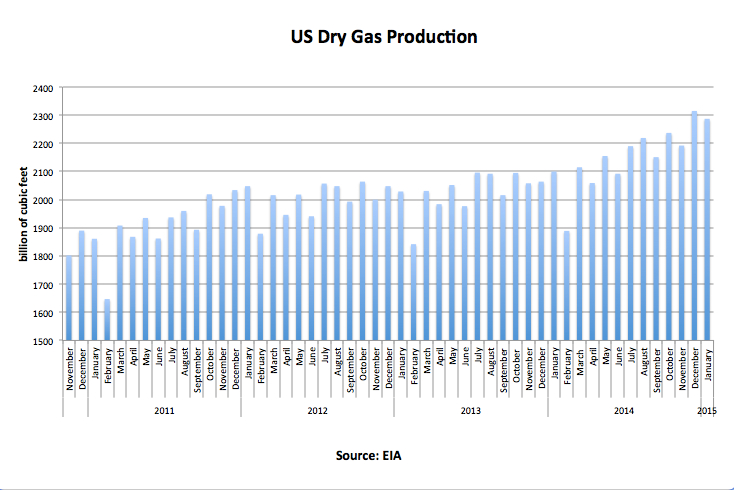
US dry gas production was up 8.9% year on year in January, and the 12-month moving average was 6.1% higher year on year, the highest growth since October 2012 (click for large image; source: here).

US Dry Gas Production Jan 2015 jpeg

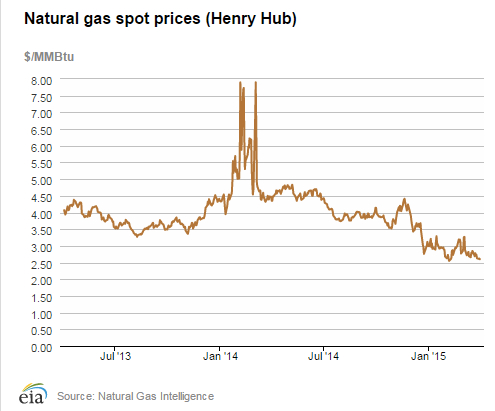
Meanwhile, natural gas prices have continued to trend down and are now reaching around $2.5 per million British thermal units (Btu). This is not far off their 2012 lows (source: here).

Henry Hub Prices Mar 15 jpeg

Continue reading

Eight Progressive UK Coalition Government Actions to Applaud

The one and only public debate between the leaders of seven UK political parties took place tonight ahead of the UK election May 7. Key topics were 1) austerity, the budget deficit and debt, 2) the NHS, 3) immigration and 4) education and intergenerational inequality. These are all big issues but hardly new.

Forgotten in the general election campaign to date are a series of ground-breaking initiatives taken by the coalition government over the past five years. These are examples of genuinely fresh thinking and should be applauded regardless of your politics. In no particular order:

1. Establishment of The Behavioural Insights Team

Dubbed the ‘nudge unit’ in a hat tip to the book by Thaler and Sunstein, this team has taken the idea of choice architecture into the heart of government. As a result, we have seen such policies as pension provision where your choice is to opt out rather than opt in–so the lazy amongst us create pension savings by default.

The nudge unit comes about from the explicit recognition the humans are not rationale calculating machines as they are portrayed in post-war economics and that frequently ‘wantability’ is different from decision-making that maximizes our well-being (see my post here).

2. Introduction of Well-Being Metrics

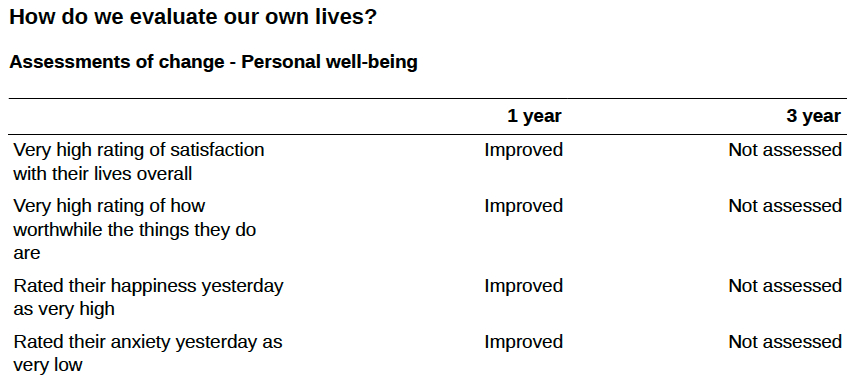
The Office for National Statistics (ONS) introduced its Measuring National Well-being (MNW) programme in 2010. We now have four questions included in the well-being survey that broadly relate to the three main ideas of happiness–life satisfaction, leading a meaningful life and feelings. As this data set builds, it will give policy-makers a far better idea as to whether what they do makes people happier (click for larger image on the chart below).

How do we evaluate our lives copy

Continue reading

Chart du Jour, 1 April 2015: Were the 1950s So Good?

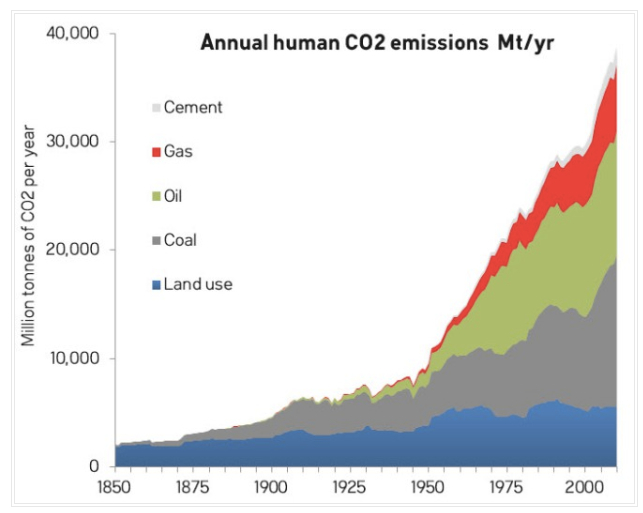
Sometimes it is best just to pilfer other people’s work– any other action feels rather pointless. This from Andy Skuce’s blog Critical Angle (click for larger image):

CO2 Sources copy

Bang! Marty McFly goes back to 1955 to persuade Doc to save the world from fossil fuel emissions (one can but dream).

Then again can we ask ourselves whether the relatively low energy intensity economies of the 1950s had a higher level of well-being than those that exist now (of course development has widened and population has grown). I’ll let my readers have a think about that.

Anyway, check out the Critical Angle blog here.

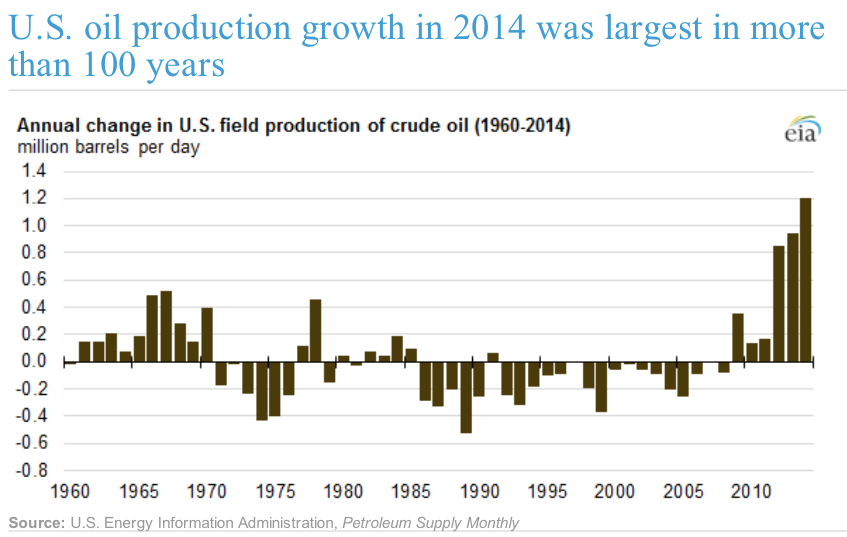
US Crude Oil Production for January 2015 (and Calling the Top)

Time for a switch in focus, from the philosophical yesterday to the prosaic today. It’s that time of the month for some hard numbers from “frack land”, i.e., the good old USA. What is more, I am going to stick my neck out today and call the top for US crude oil production.

The US government agency the Energy Information Administration (EIA) reports monthly crude oil production with a 2 month lag; January 2015 data were published on 30 March. January saw oil production averaging 9.2 million barrels per day, a rise of 14.8% year on year. Over the previous month, production was down slightly. Nonetheless, we did see a month-on-month decline in November only for production to power to a new record again in December.Yet I’m still calling the top.

True, growth has far exceeded what I expected when I started writing this blog. The production surge is indisputable (here, click for larger image).

US Oil Production jpeg

The reason why I didn’t expect to see output rise so far so fast was due to the high production declines rates exhibited by tight oil plays, leading to what many call the ‘Red Queen’ syndrome: the need to run faster and faster just to stand still. So a mea culpa on my side: the US shale oil industry did run faster and faster. With global crude oil prices locked above $100 barrel for three long years, we got both a lot more rigs and, critically, more efficient rigs as fracking technology advanced. This was enough to overwhelm the naturally high depletion rates. Continue reading

Wantability, Well-Being and Risk

I’ve been mulling a name change for the blog for some time. The name the “The Rational Pessimist” was a riposte to Matt Ridley’s book “The Rational Optimist“. Ridley’s book is a paean to global free markets and human innovation–and in parts is correct. Since the industrial revolution commenced, technology coupled with capitalism has lifted the bulk of the world’s population out of a Hobbesian life that was “nasty, brutish and short”. But where I differ from Ridley is in believing that a 200-year data set of economic growth can fully capture all future risk.

Ridley’s book is Panglossian. He believes that every problem we face–from climate change to resource depletion–is relatively minor, just waiting to be solved by a technological fix. For him, price always trumps scarcity. Whenever something looks like it is running out, the magic of markets will  always lead to new discoveries or acceptable substitutes.

As an economist by training, I accept that the everlasting dance between supply, demand and price is something of beauty. But I also believe that it has its limitations. A backward-looking empirical observation that things haven’t run out is different from a forward-looking theoretical prediction that things won’t ever run out. North Sea oil is running out regardless of price, and a global supply of oil is not qualitatively different from a local one.

Of course, technology may provide a perfect, or dare I say it better, substitute for fossil fuels. But then again it may not. That is uncertainty, and the consequences of that uncertainty is the concept of risk.

Continue reading

Battery Banter 5: The Relevance (or Not) of Moore’s Law

Concurrently with writing this series of blog posts, I have been reading Steve Levine’s newly published book “The Powerhouse: Inside the Invention of a Battery to Save the World“.  The book is a bit of a mess, full of random jumps, wrong turns and dead ends. Perhaps that is appropriate, since it describes a battery development process that is full of random jumps, wrong turns and dead ends.

While the back cover blurb tells me that the book reads like a thriller, it is more like Sir Arthur Conan Doyle’s tale “The Dog That Didn’t Bark”. We have two questing groups of heroes: the public-sector Argonne National Laboratory battery guys and the plucky private-sector upstarts at Envia Systems. Yet the book peters out at the end, with both teams abjectly failing in their respective quests to find the super battery Holy Grail. Argonne’s new version of nickel manganese cobalt batteries (NMC 2.0) suffers from chronic voltage fade (meaning that the performance of the battery slumps after repeated recharging cycles). Meanwhile, Envia’s super battery is spectacularly flawed, based on a collapsing anode and dodgy intellectual property.

Despite the book being in need of a good edit, it is still full of interesting insights into the battery development process. In a chapter recounting conversations with Don Hillebrand, an old school auto expert working at Argonne, Levine makes this observation:

Unlike microchips, batteries don’t adhere to a principle akin to Moore’s law, the rule of thumb that the number of switches on a chip–semiconductor efficiency–doubles every eighteen months. Batteries were comparatively slow to advance. But that did not make electronics superior to electric cars.

Consumer electronics typically wear out and require replacement every two or three years. They lock up, go on the fritz, and generally degrade. They are fragile when jostled or dropped and are often cheaper to replace than repair. If battery manufacturers and carmakers produced such mediocrity, they would be run out of business, sued for billions and perhaps even go to prison if anything catastrophic occurred. Automobiles have to last at least a decade and start every time. Their performance had to remain roughly the same throughout. They had to be safe while moving–or crashing–at high speed.

At this point, I want to refer you back to the original 1965 article by Gordon Moore that ushered in Moore’s Law entitled  “Cramming more components onto integrated circuits.” From this, we have the quintessential exponential chart, which delivers a straight line if you put the y-axis onto a logarithmic scale (click for larger image):

Moore's Law Paper jpeg

This is the world of Ray Kurzweil‘s singularity which I blogged on in a post a couple of years back called “Singularity or Collapse: Part 1 (For Ever Exponential?“. As knowledge increases by powers of 10, virtually every challenge faced by mankind dissolves. Continue reading